ServicesAC Installation
AC Installation in Spangle
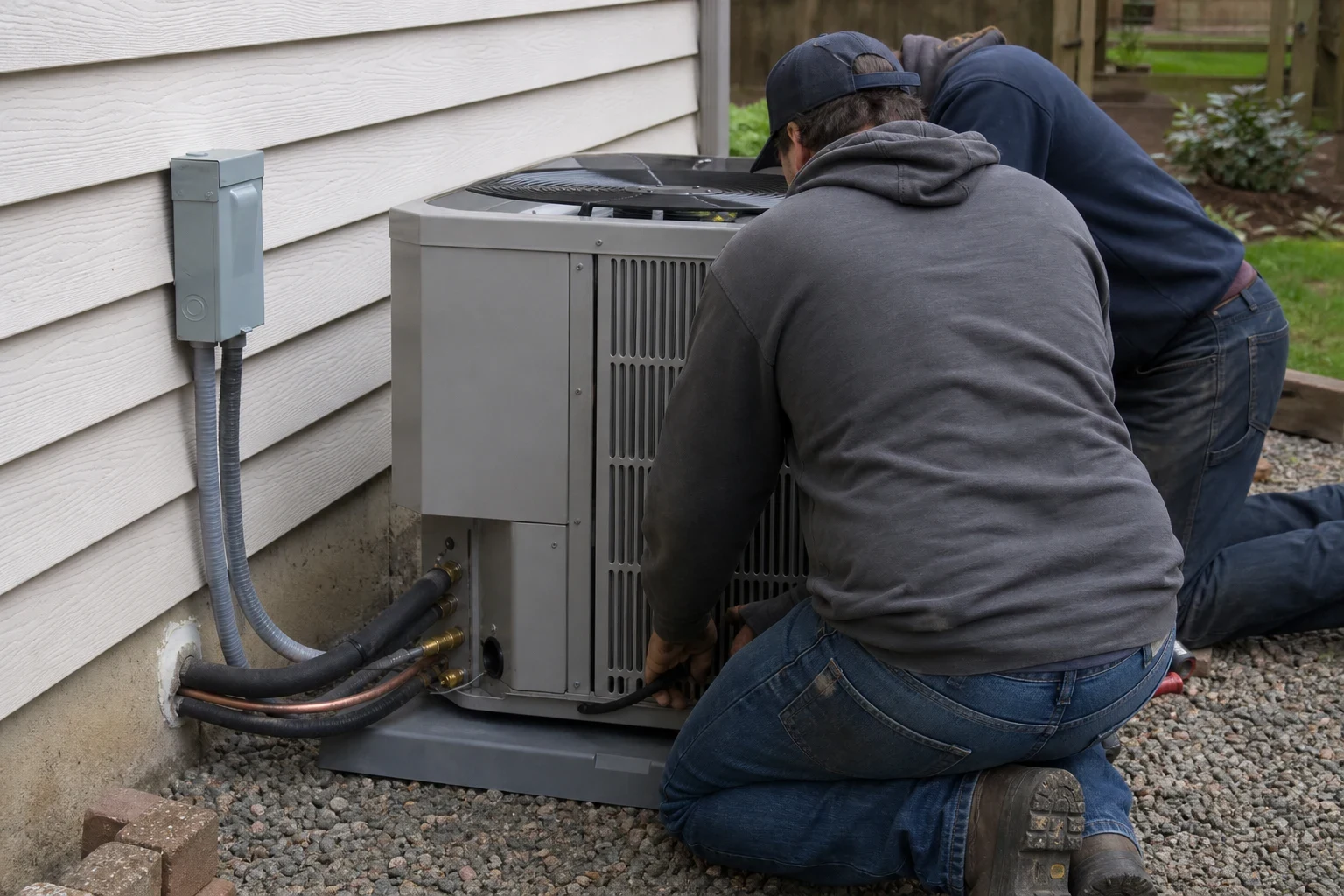
We size a new central air system to your home with a room-by-room load calculation, match the outdoor unit to the indoor coil, and commission it with measured readings. The estimate costs you nothing, and an itemized quote is in your hands, on paper, before a single tool comes out.
When a new air conditioner is the right call
Replacement makes sense when the repair math stops working: a failed compressor on a system past its second decade, a leaking evaporator coil on an older R-410A unit, or a condenser crushed by a fallen limb or pitted by hail. If your system can still be fixed sensibly, we will tell you so and point you to AC repair instead.
A new air conditioner is only as good as its installation. An oversized unit short-cycles, leaving rooms clammy and wearing out the compressor early. An undercharged one runs all afternoon and never catches up. Most of what decides how your system performs over the next fifteen years happens on installation day, so that is where we spend our care.
If your home has no ducts, central AC is usually not the best fit. Our ductless mini-splits page covers that option, and if you also heat with an aging furnace, a heat pump may handle both jobs.
What the installation includes
- Load calculation, not a guess
- We measure rooms, windows and insulation and run a Manual J calculation. The tonnage comes from that number, not from the size of the old unit, which was often wrong to begin with.
- Matched outdoor unit and coil
- The condenser and indoor evaporator coil are selected as a rated pair, with the coil sized to sit correctly on your furnace. A mismatched coil can cost you much of the efficiency printed on the label.
- Line set, pad and electrical
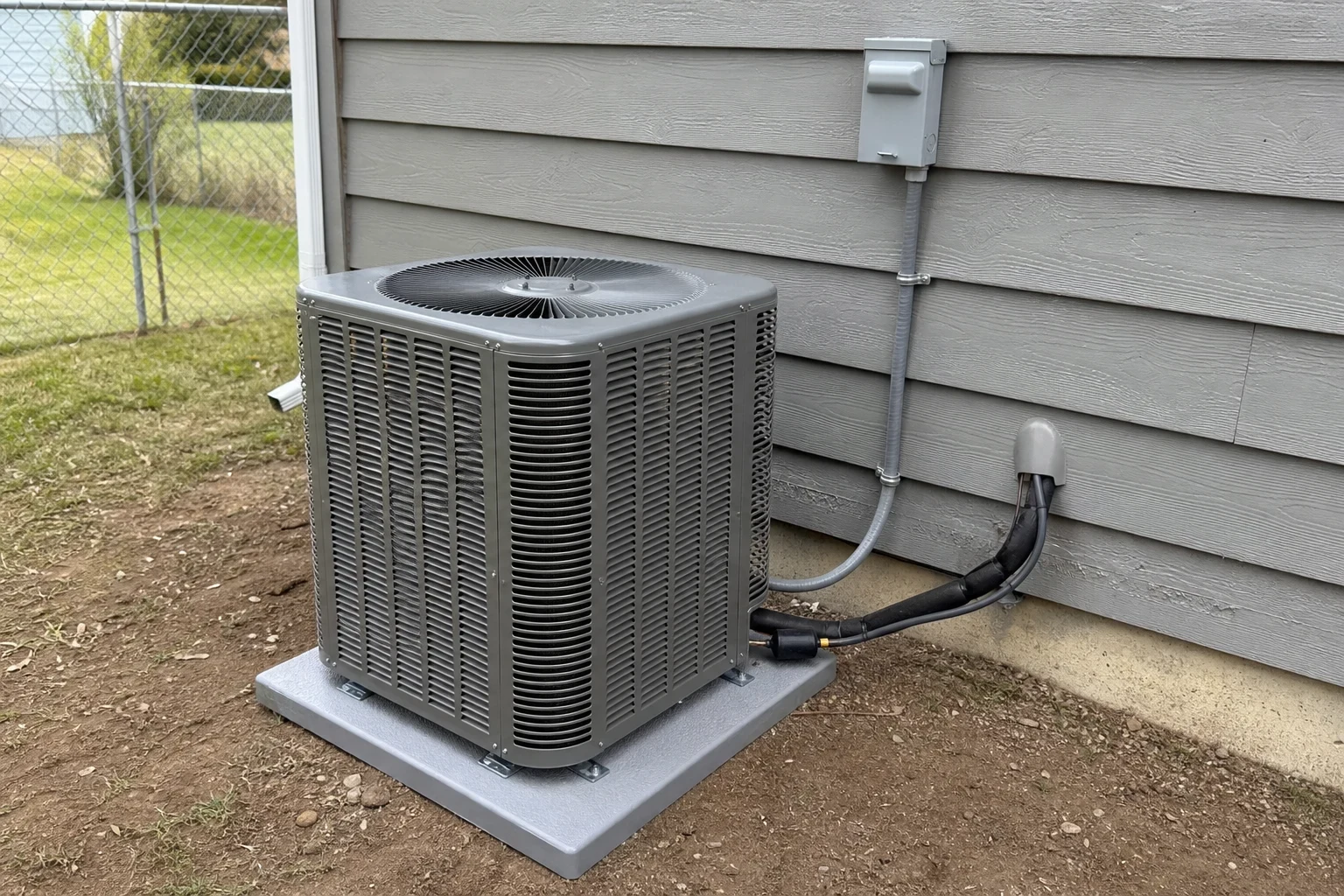
- We set the condenser level on a new pad, run or flush the refrigerant line set, and install a weatherproof disconnect and correctly sized breaker. Low-voltage wiring goes to a thermostat that suits the equipment.
- Brazing and a deep vacuum
- Joints are brazed with nitrogen flowing through the pipe so no scale forms inside. We then pull the system down to a deep vacuum and confirm it holds, which removes the moisture that destroys compressors from the inside.
- Charge set by measurement
- Refrigerant charge is adjusted using superheat or subcooling readings, and we check airflow across the coil. You get the numbers we recorded.
- Permit, haul-away and cleanup
- We pull the permit the job requires, recover refrigerant from the old unit, remove the old equipment and leave the work area clean.
Signs it is time to replace your AC
Storm or impact damage
Hail can flatten condenser fins and a falling branch can crack the coil or bend the fan shaft. When the coil itself is damaged, replacement is often the more sensible path, and we photograph what we find so you have a record.
A failed compressor on an older unit
A compressor replacement on a system near the end of its life rarely pays back. We will show you the comparison plainly.
Repeated refrigerant leaks
Topping off refrigerant every summer means a leak is still there, usually in the evaporator coil. Recharging older systems keeps getting harder as refrigerants are phased down.
Rising bills and uneven rooms
A worn compressor and fouled coil lose capacity gradually. If upstairs bedrooms never cool on hot afternoons, the system may be undersized or simply worn out.
Constant cycling or loud starts
Short cycling, a grinding fan motor or a hard-starting compressor point to equipment working past its limits.
What sets the price of a new air conditioner
Your house shapes most of the work, so every installation is priced on its own. We go over each line of the written quote with you so the total makes sense. Estimates on new and replacement systems are free.
Size and efficiency rating
The load calculation sets the capacity. Variable-speed and higher SEER2 units cost more to buy and less to operate over long, hot, dry summers.
Fit with your furnace and coil
When the furnace blower can't push enough air for the new unit, or the coil cabinet won't fit, extra parts and labor come in. In some homes it makes more sense to replace the furnace at the same time.
Refrigerant lines and unit location
Keeping a clean line set of the right size lowers the cost. Moving the unit, running longer lines or replacing the line set raises it.
Panel and wiring work
Bringing an older panel up to code for new equipment can mean adding a breaker or circuit or swapping the disconnect.
Permits and working space
The permit fee, along with cramped attics, crawlspaces or closets that slow the crew down, shows up in the final price.
How installation day runs
- 1
Free in-home estimate
We inspect your furnace, electrical panel and the condenser location, run the load calculation and explain the equipment options. The price is set down in writing and agreed before we schedule the work.
- 2
Protect and remove
We lay floor protection along the path to the furnace, recover refrigerant from the old system and remove the old condenser and coil.
- 3
Set and connect
The new coil goes on the furnace, the condenser is set on its pad, and the line set is brazed under nitrogen. Electrical connections and the disconnect are completed and torqued to spec.
- 4
Vacuum, charge and test
We pull a deep vacuum, release the charge, and fine-tune it by superheat or subcooling. Then we verify temperature drop across the coil, check the condensate drain and run the system through full cycles.
- 5
Walkthrough
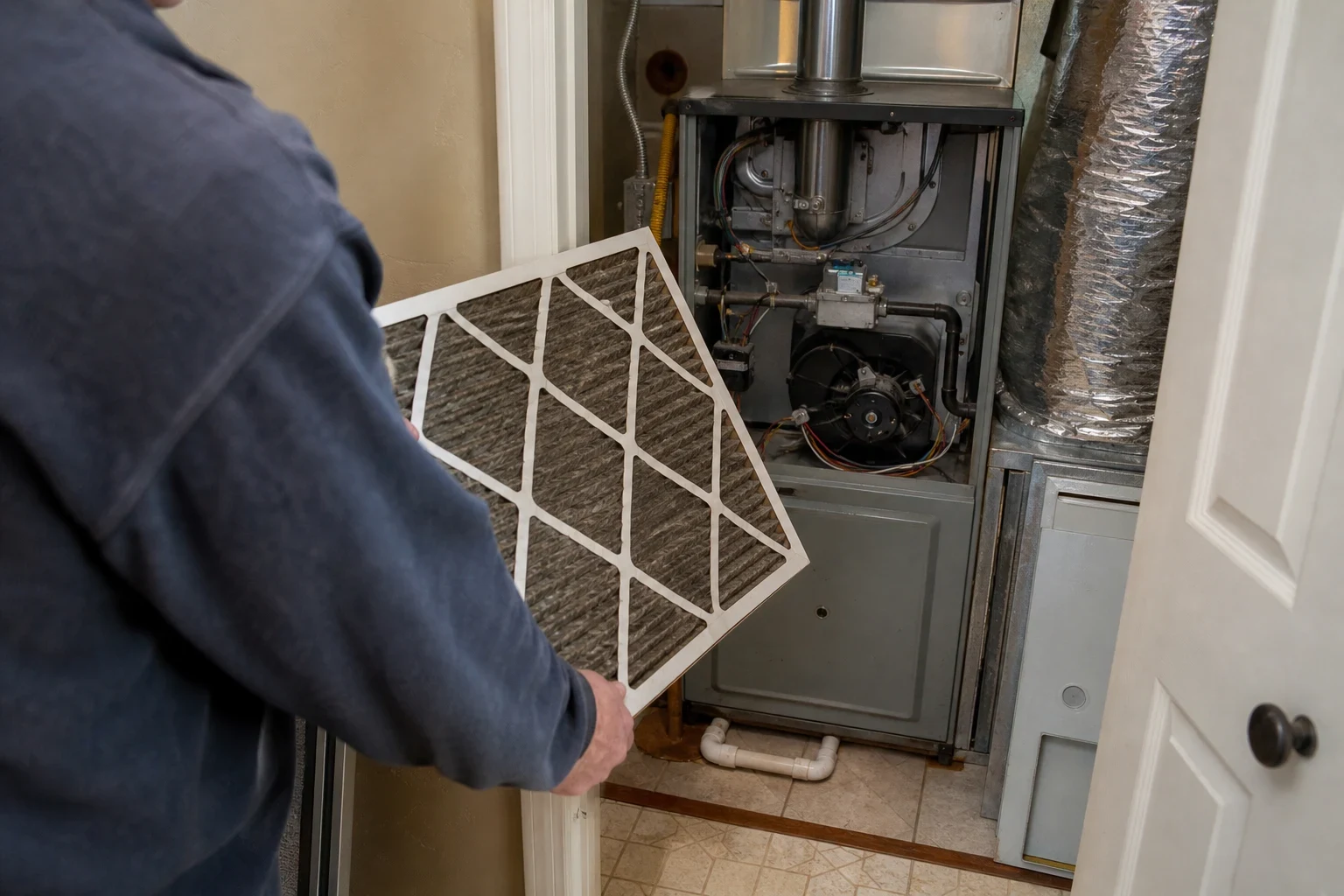
We show you the thermostat, the filter, and how to keep the condenser clear, then schedule any permit inspection.
Questions about a new AC
Can you put in the same size unit I have now?
We can, but we would check first. Plenty of older systems were too big from day one, and new insulation or windows change how much cooling the house needs. A Manual J calculation settles the question, and it often points to a smaller unit that runs quieter.
Does the indoor coil have to be replaced as well?
Nearly always. The coil and outdoor unit carry a rating as a matched set, and current refrigerants don't work with older coils. Keeping the old coil also keeps a probable leak spot in the system.
A storm damaged my condenser. What do I do first?
Shut the system off at both the thermostat and the outdoor disconnect so a bent fan or crushed coil can't cause more damage. Photograph it before anything gets moved. We can look it over, tell you if repair or replacement is the better choice and write up what we find for your claim, though your adjuster decides what is covered.
How long will the install take?
Swapping the AC on an existing furnace is normally a one-day job. Rerouted line sets, electrical work or replacing the furnace too can add time, and we let you know at the estimate.
Is a heat pump worth considering instead?
It's worth weighing. Installing a heat pump is a lot like installing an AC, but it also heats the house most of the year. If you go that route, we guide you through the Avista rebate forms and the federal tax credit filing so you collect what you qualify for. Our heat pumps page covers how they do in cold snaps.
Plan your new air conditioner
Tell us about your current system and your home, and we will set up a free in-home estimate in Spangle or nearby towns like Cheney and Medical Lake. You will have a written quote in hand before anything is removed.