ServicesCommercial HVAC
Commercial HVAC Service in Spangle, WA
Shops, offices and small commercial buildings count on us to repair, replace and service their heating and cooling equipment. If a windstorm or power surge knocks a unit out, we pick up at any hour, track down the part that failed and put a quote in writing before work starts.
Equipment that keeps your doors open
Commercial systems fail differently from residential ones. A packaged rooftop unit sits fully exposed to hail, wind and snow load, runs longer hours, and usually serves a space full of customers, staff or stock that cannot wait out a slow fix. We work on rooftop units, split systems, gas-fired unit heaters and ductless equipment in light commercial buildings.
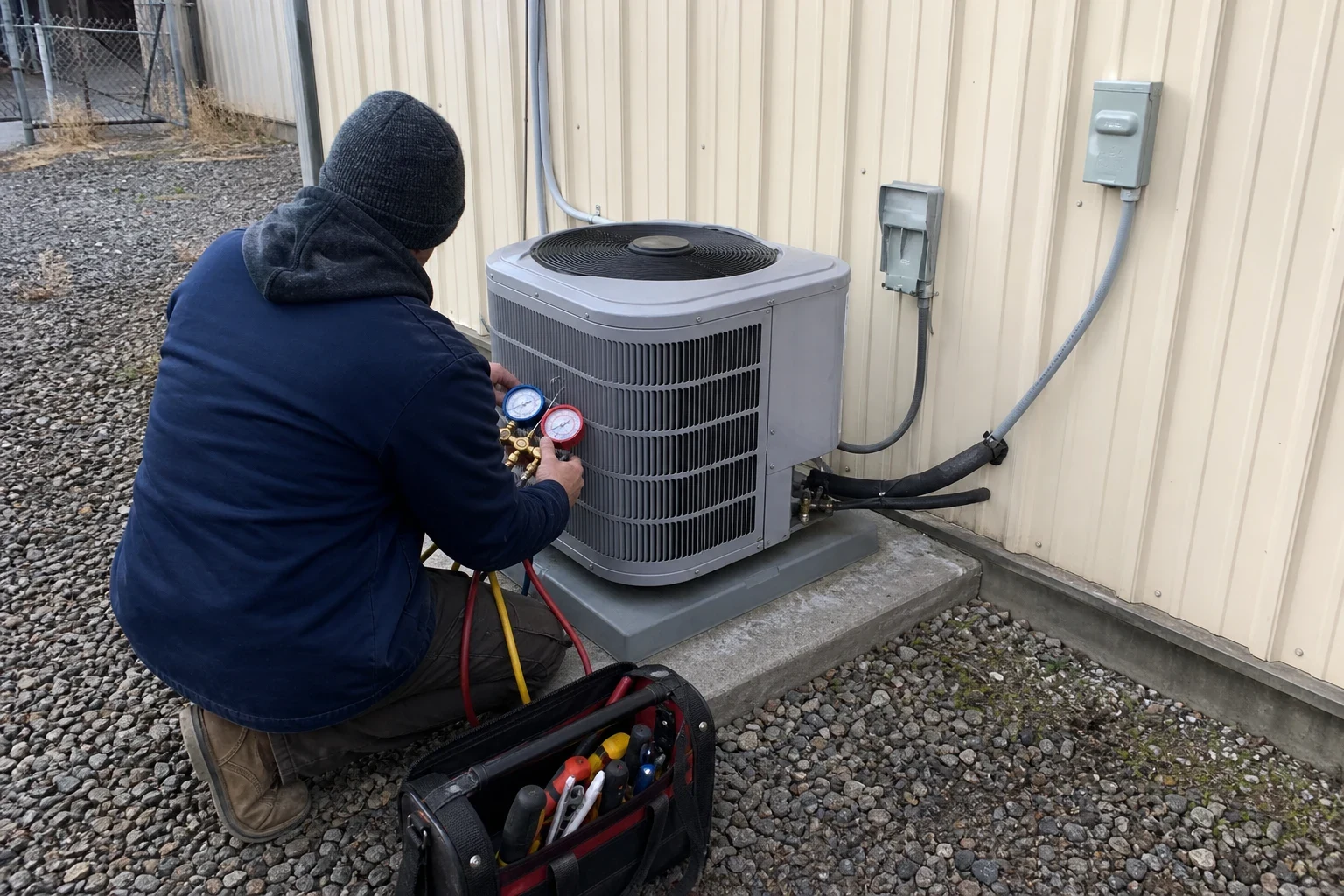
Our focus is getting you running again after sudden damage, then making sure the same failure does not repeat. After a storm that means checking the condenser coil for hail-flattened fins, the contactor and control board for surge harm, and the curb, panels and fasteners for wind movement. We photograph what we find, so you have a clear record for your insurer or your landlord.
Planning a new building or a tenant build-out? Our New Construction HVAC page covers that work, and for a single office or addition, Ductless Mini-Splits are often the simpler fit.
What our commercial service includes
- Rooftop unit testing and repair
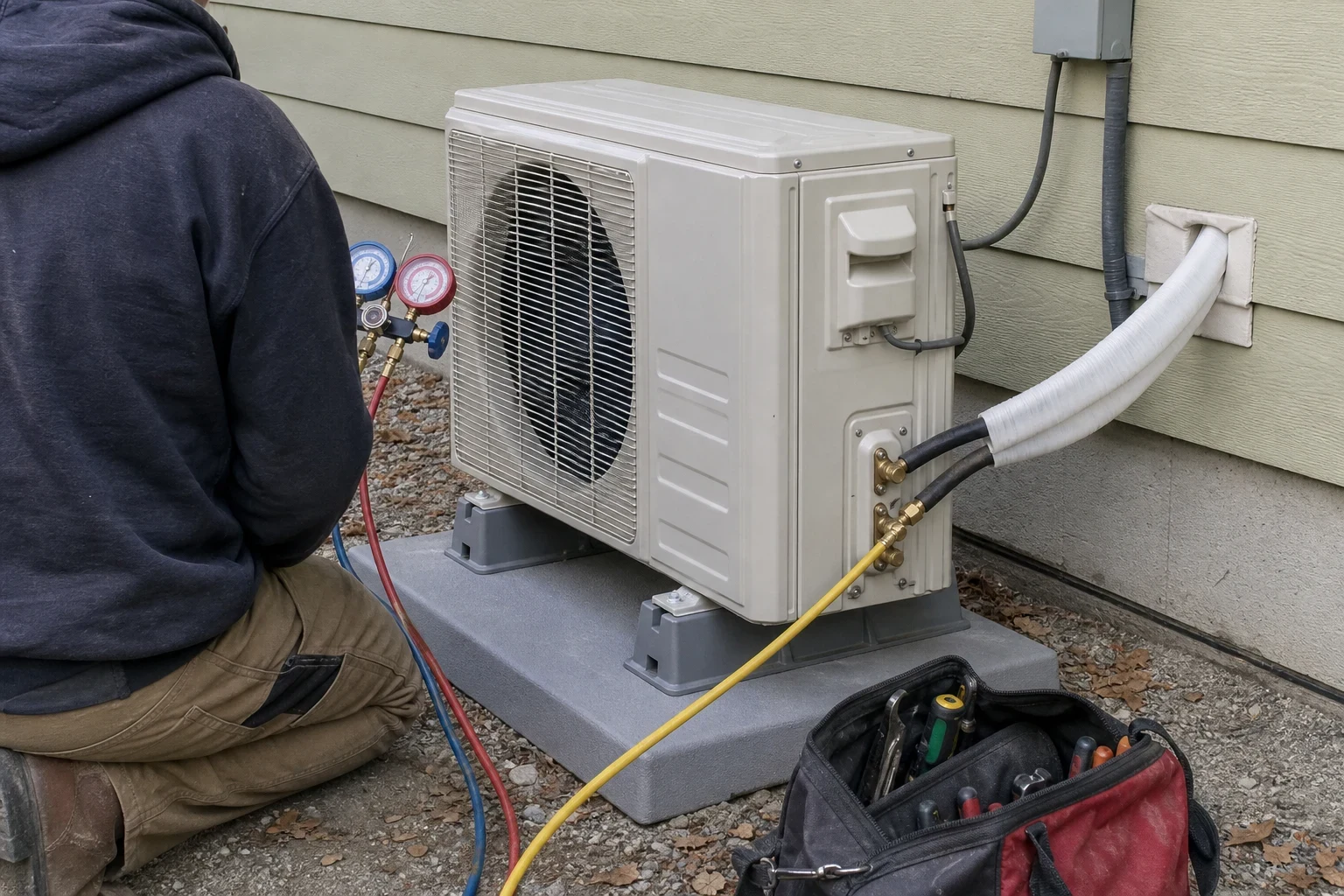
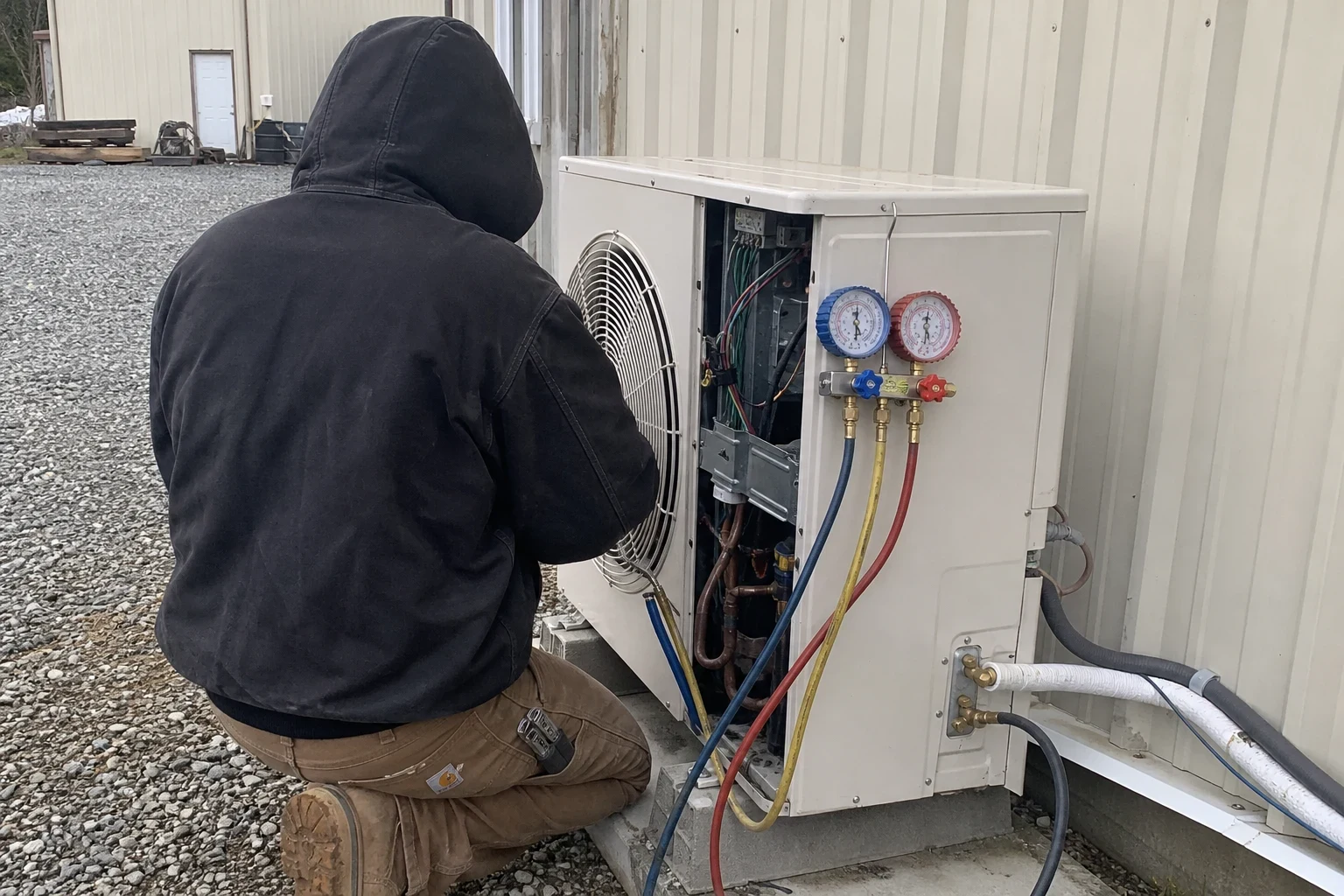
- Refrigerant pressures, superheat and amp draw are measured before anything is swapped. Typical failures are compressors, condenser fan motors, run capacitors, contactors, blower belts and control boards. Testing first means you never pay for a part that wasn't the problem.
- Gas heaters and unit heaters
- We look for cracks in heat exchangers, clean flame sensors and test igniters, inducer motors and gas valves. Before we leave any heating repair, we check combustion and carbon monoxide.
- Storm and surge inspection
- Hail, flying debris and outages leave telltale damage: flattened coil fins, bent fan blades, pitted contactor points and blown fuses. We sort weather damage from ordinary wear and document each item separately.
- Replacing equipment
- If repairs would cost close to what the unit is worth, or it still uses phased-out R-22, we size and price a replacement. Installation and replacement estimates are free.
- Seasonal service visits
- Ahead of each heating and cooling season we swap filters, clean coils, adjust belt tension and test economizer dampers. These small steps head off a compressor failure in the middle of July.
When your building's equipment needs a technician
Runs all day but falls behind
Air is moving, yet the space gets warmer each afternoon. A low charge, a weak compressor or a dirty condenser coil is usually behind it.
Won't start after the power returns
The spike when power comes back can burn out capacitors, contactors and control boards. If the unit won't restart or keeps tripping its breaker, turn it off and have it tested instead of resetting it over and over.
Hail or wind on the roof
Rooftop units take the weather head-on. Crushed fins restrict airflow, and a unit that has moved can pull on refrigerant lines and wiring.
Rapid cycling or strange smells
Starting and stopping every few minutes wears a compressor out quickly. If you smell burning or gas, shut the system off and call us at once.
Frost on the refrigerant lines
Ice on the suction line points to a low charge, a clogged filter or a weak blower. Running the unit like that can send liquid refrigerant into the compressor.
How a commercial service call runs
- 1
You call, we ask the right questions
Tell us what the equipment is doing, what it serves and when it stopped. We answer around the clock and set a time that works around your business hours.
- 2
Safe access and lockout
We confirm roof access, then lock out and tag the disconnect before opening any panels. Your staff and customers stay clear of the work.
- 3
Diagnosis and written quote
We test the electrical, refrigerant and combustion side, photograph damage, and give you a written quote. Nothing gets repaired until you approve it.
- 4
Repair and full test
We install the parts, then run the unit through a full heating or cooling cycle while checking pressures, temperatures and amp draw.
- 5
Clear findings
You get a plain explanation of what failed, why it failed and what to watch for, plus the photos for your records.
What changes the price of commercial HVAC work
We price commercial work by the equipment and how hard it is to reach, not with a flat rate. You get our quote in writing before any part is replaced, and if you approve the job, the diagnostic fee is applied to the repair. There are no emergency or after-hours fees, so a 2 a.m. breakdown is priced like a weekday morning visit.
- Type and size of the unit
- A 3-ton split system and a 15-ton rooftop unit run on very different compressors, motors and refrigerant amounts. The more tonnage, the bigger the parts.
- Getting to the equipment
- Most repairs need only a ladder and parts we can carry. Replacing a whole rooftop unit can call for a crane and a new curb adapter, which makes it a larger job.
- Refrigerant and parts on hand
- Recharging an older R-22 unit costs more, and discontinued boards or motors sometimes need a substitute. You hear about this before agreeing to a repair.
- How bad the storm damage is
- Straightening a few bent fins takes little time. A punctured coil or a unit pushed off its curb is a bigger job, and our photos show you why.
Commercial HVAC questions
Something not covered here? (509) 512-1867
Can you service a packaged rooftop unit?
Yes. A lot of our commercial calls involve rooftop units, both gas-electric and heat pump models. We handle repairs and seasonal service on them, and we quote a replacement when the numbers favor it.
Will you come out at night or on a weekend?
Yes, we take emergency calls 24/7. There are no emergency or after-hours fees, so you are not penalized for a unit that fails on a Saturday night.
Can you help with an insurance claim after a hailstorm or windstorm?
We document what we find with photos and written notes that separate weather-related problems from normal wear. That gives your adjuster something concrete to review. We do not act as the adjuster or decide what your policy covers.
How do we know whether to repair or replace?
We compare the repair cost to the unit's age, condition and refrigerant type. A newer unit with a failed capacitor is an easy repair. An aging R-22 unit with a failed compressor usually is not, and we will say so plainly.
Do you serve buildings outside Spangle?
Yes. We handle commercial calls in Cheney, Spokane, Spokane Valley, Airway Heights and Medical Lake as well as around Spangle.
Get your building heating and cooling again
Call us with the make of your unit and what it is doing. We can come out around the clock for repairs, or give you a free quote on new equipment.