ServicesFurnace Repair
Furnace Repair in Spangle, WA
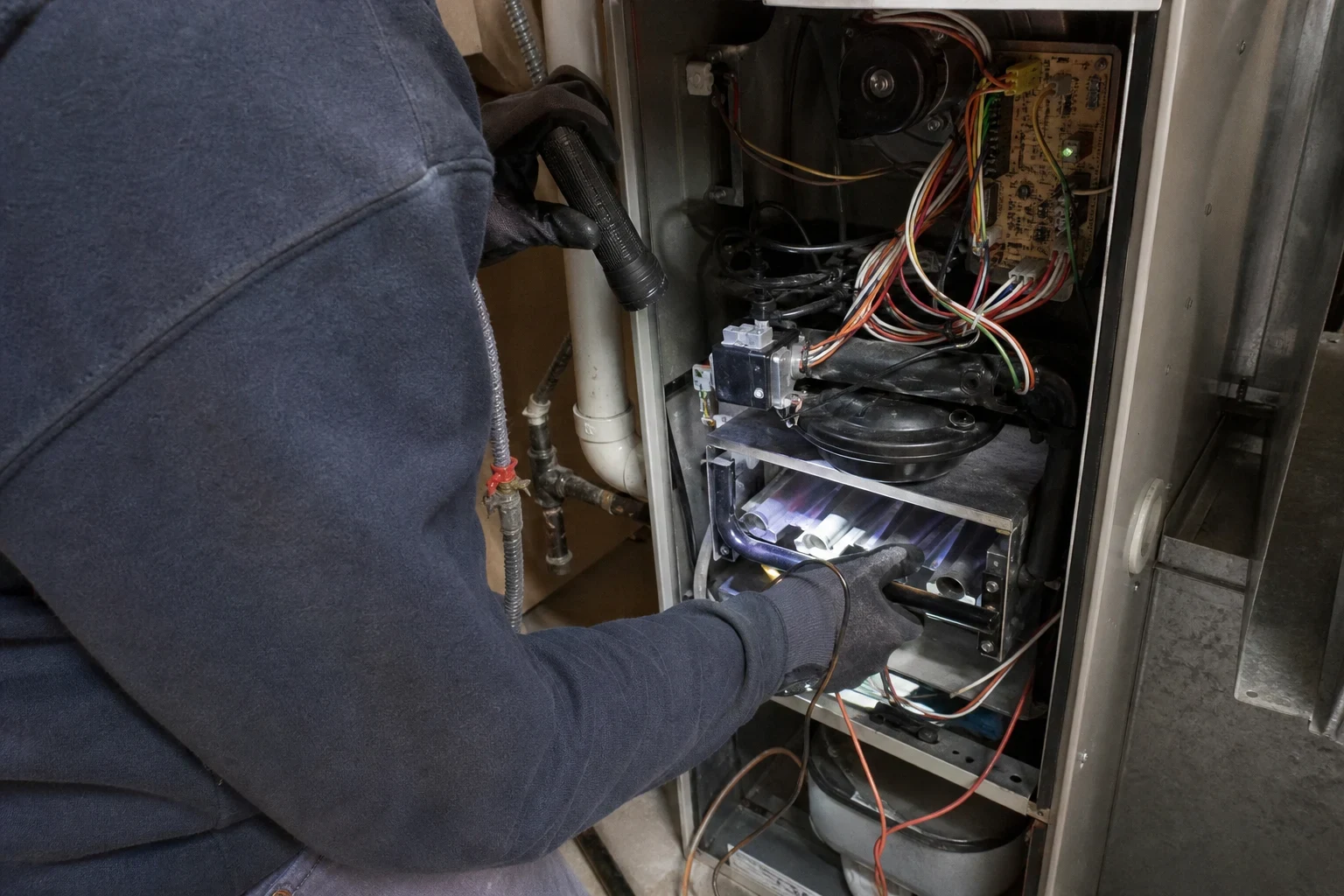
When your furnace quits on a cold night or after a storm knocks the power out, we come out, test the ignition and safety circuits, and tell you exactly which part failed and why. The repair is quoted in writing before we start.
Getting Heat Back the Right Way
Every time a gas furnace starts, it follows the same order. The inducer motor purges the heat exchanger, and a pressure switch closes once it senses enough draft through the vent. Only then does the hot surface igniter glow, gas flow through the valve and the flame sensor verify that the burners caught. If any step in that order fails, the control board halts the start and records a fault, usually as a blinking LED pattern. We find the step that failed and replace that one part, instead of swapping parts until the heat happens to come back.
Storms and outages are hard on furnaces. A power surge can damage a control board, a sudden outage can leave a high-efficiency unit locked out, and drifting snow can plug the PVC intake and exhaust pipes on the side of your home. We check for those causes first after bad weather, because they are common and often quick to clear.
If the repair costs more than the furnace is worth, we will say so and walk you through furnace installation as an option. Most of the time, though, a no-heat call ends with one part replaced and the system tested through several full cycles.
What a Furnace Repair Visit Covers
Ignition and flame testing
We measure the hot surface igniter's resistance and the flame sensor's microamp signal. A dirty sensor rod can shut down a perfectly good furnace a few seconds after it lights, and cleaning it is often all that is needed.
Draft and venting checks
We test the inducer motor and the pressure switch, then look at the vent pipes and the condensate trap. A blocked trap or a cracked pressure hose will stop the furnace from firing at all.
Blower and electrical diagnosis
We check the blower motor, its run capacitor, the control board and the limit switch. A tripping limit switch usually points to restricted airflow, often a clogged filter, rather than a bad switch.
Combustion safety inspection
We look at the heat exchanger for cracks or rust-through and check for carbon monoxide around the appliance. If we find a real hazard, we show you what we saw before recommending anything.
Quote on paper, then the repair
Nothing gets replaced until you have the price in writing. Once you approve the work, the diagnostic charge you already paid goes toward the repair bill.
Signs Your Furnace Needs Repair
Clicking, then nothing
The thermostat calls, you hear the inducer, but the burners never light. That usually means a failed igniter, a stuck pressure switch or a gas valve problem.
Lights, then shuts off
Burners that fire for a few seconds and go out point to the flame sensor or a grounding problem. The board is shutting the gas off because it cannot confirm a flame.
Blowing cold air
If the blower runs but the air stays cool, the furnace has likely locked out after repeated failed starts, or the limit switch is tripping from overheating.
Water around the base
High-efficiency furnaces make condensate. A cracked trap or a frozen drain line can leak, and it can also trip the safety switch that shuts the furnace down.
Trouble after an outage
No heat once the power returns can mean a lockout, a tripped breaker or a control board damaged by a surge. Snow or ice over the vent pipes causes the same symptom.
Odd smells or soot
A rotten-egg smell means leave your home and call the gas utility first. Soot near the burners or a lazy yellow flame means poor combustion, and the furnace should stay off until it is checked.
What Happens on a Repair Visit
- 1
You reach us
Tell us what you hear, what the status light is blinking and whether a storm or outage happened first. We answer around the clock, and your bill never includes emergency or after-hours fees.
- 2
We diagnose on site
If snow or ice is blocking the vent pipes outside, we clear them, then meter-test the start sequence. You see the bad part or the reading that confirms it.
- 3
The price in writing
You receive a written quote listing parts and labor before any work begins. When a new furnace is the better choice, we show you why with simple numbers.
- 4
Fix and confirm
After the new part is in, we run several heating cycles, measure temperature rise across the heat exchanger and make sure the safety switches work. We tidy up and walk you through the repair.
What Drives the Price of a Furnace Repair
The price mostly depends on what broke and how easy it is to get to. Cleaning a flame sensor is a far smaller job than swapping a control board. Your diagnostic fee counts toward the repair, and you see the whole price in writing before work begins.
- Which part broke
- Flame sensors, igniters and capacitors are inexpensive parts. Control boards, gas valves, blower motors and inducer motors cost more and take more time to put in.
- Age of the furnace and parts supply
- Older or discontinued furnaces sometimes need a universal part, and fitting it can take extra time.
- Where the furnace sits
- Working in a tight attic or crawlspace takes more time than working in an open utility room.
- Damage from a storm
- One surge can ruin several parts at once, like a control board and its transformer. We check the full circuit so a second trip isn't needed.
Common Furnace Repair Questions
Something not covered here? (509) 512-1867
The power went out and now my furnace won't run. Can I reset it?
Give it one try. Make sure the breaker and the furnace switch are both on, then lower the thermostat and raise it again. If the board keeps flashing a fault or the burners won't stay lit, stop there, since resetting it again and again can mask what is actually wrong.
Do my vent pipes need checking after snow?
They do if your furnace is a high-efficiency model with white PVC pipes exiting the wall. Carefully clear snow and ice away from both openings. If it still won't start, the pressure switch may be locked out or the condensate drain frozen, and we can take care of either.
Should I repair an older furnace?
Often yes, when the heat exchanger is in good shape and only one part has failed. If the heat exchanger is cracked or the furnace keeps needing major parts, we will tell you, so you can weigh that against a new furnace first.
Do you charge more for a call late at night or on Sunday?
No. We charge the same at 2 a.m. as at noon and add no emergency or after-hours fees. A furnace that fails on a Sunday night is billed just like a Tuesday morning visit.
Can you fix a heat pump that stopped heating?
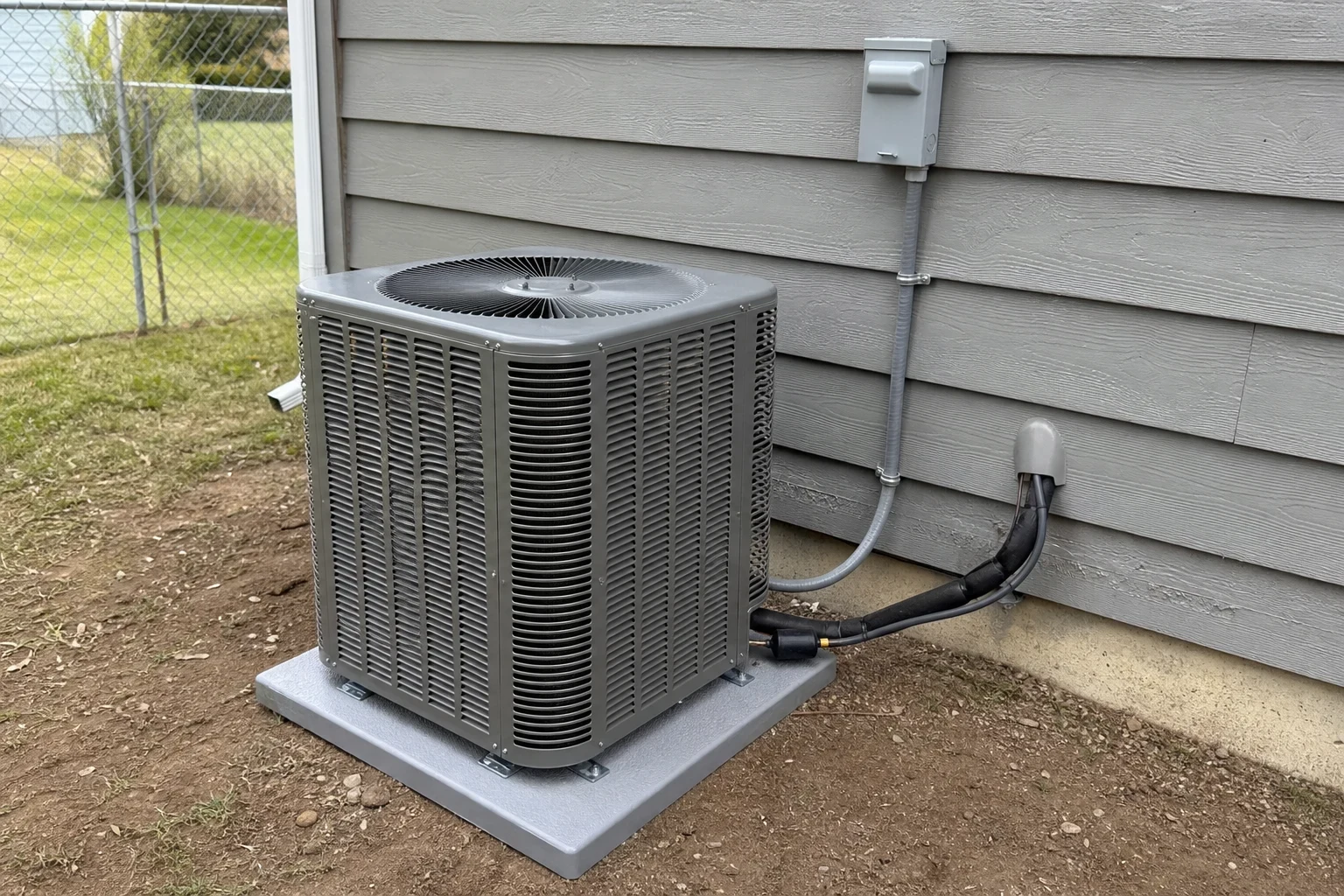
We can. When a heat pump runs in winter but blows cool air, the cause is often a defrost cycle that is stuck or a reversing valve that failed. See our Heat Pumps page for that service.
No Heat? Let Us Find the Cause
Tell us what your furnace is doing and we will get a technician headed your way, any hour of the day. You will see the repair price in writing before anything is replaced.