ServicesEmergency HVAC Repair
Emergency HVAC Repair in Spangle, WA
If your furnace stops lighting overnight or a falling limb crushes the condenser, we take the call at any hour. We pin down the failed component, make the equipment safe and hand you a written quote before repairs begin. Nights and weekends carry no emergency or after-hours fees.
When a breakdown can't wait until morning
Some failures make the house unsafe, or will soon. No heat with the overnight low near zero puts water lines at risk of freezing. No cooling in a heat wave is dangerous for anyone elderly or ill. A gas smell near the furnace, a hot electrical odor from the blower, or water spreading under the air handler all belong in this group too.
Severe weather drives many of these calls. A surge when power returns can burn out a furnace control board or an AC run capacitor. Wind packs debris into condenser fins, and ice can bend a heat pump fan blade or encase the outdoor coil. Our order is the same every time: make the equipment safe, then restore heat or cooling. If the permanent fix needs a part that isn't on the truck, we say so and look for a safe stopgap to keep your home livable.
Not every problem has to be fixed at night. If your system still runs but sounds wrong, scheduled furnace repair or AC repair may be the better call, and we'll tell you that on the phone.
What we do on an emergency call
- Safety comes first
- We leak-check the gas valve and fittings, test for carbon monoxide around the furnace and look for cracks in the heat exchanger. If we find something unsafe, we shut the equipment down and tell you why before any other work.
- Testing the electrical and controls
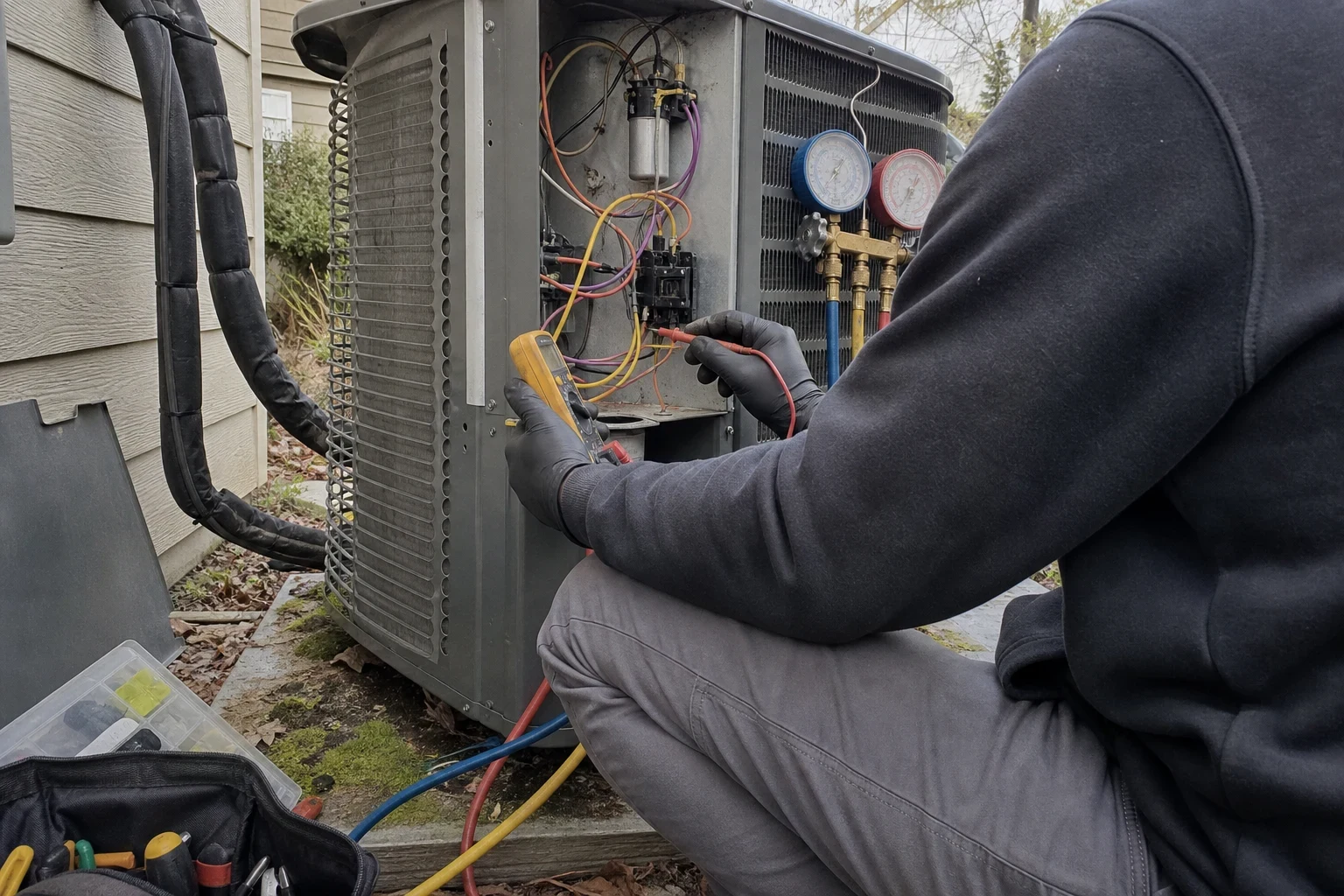
- A surge usually knocks out the least expensive parts first: the control board fuse, run capacitors, contactors and igniters. We put a meter on each one rather than guessing, so you only pay for what really failed.
- Checking the outdoor unit after bad weather
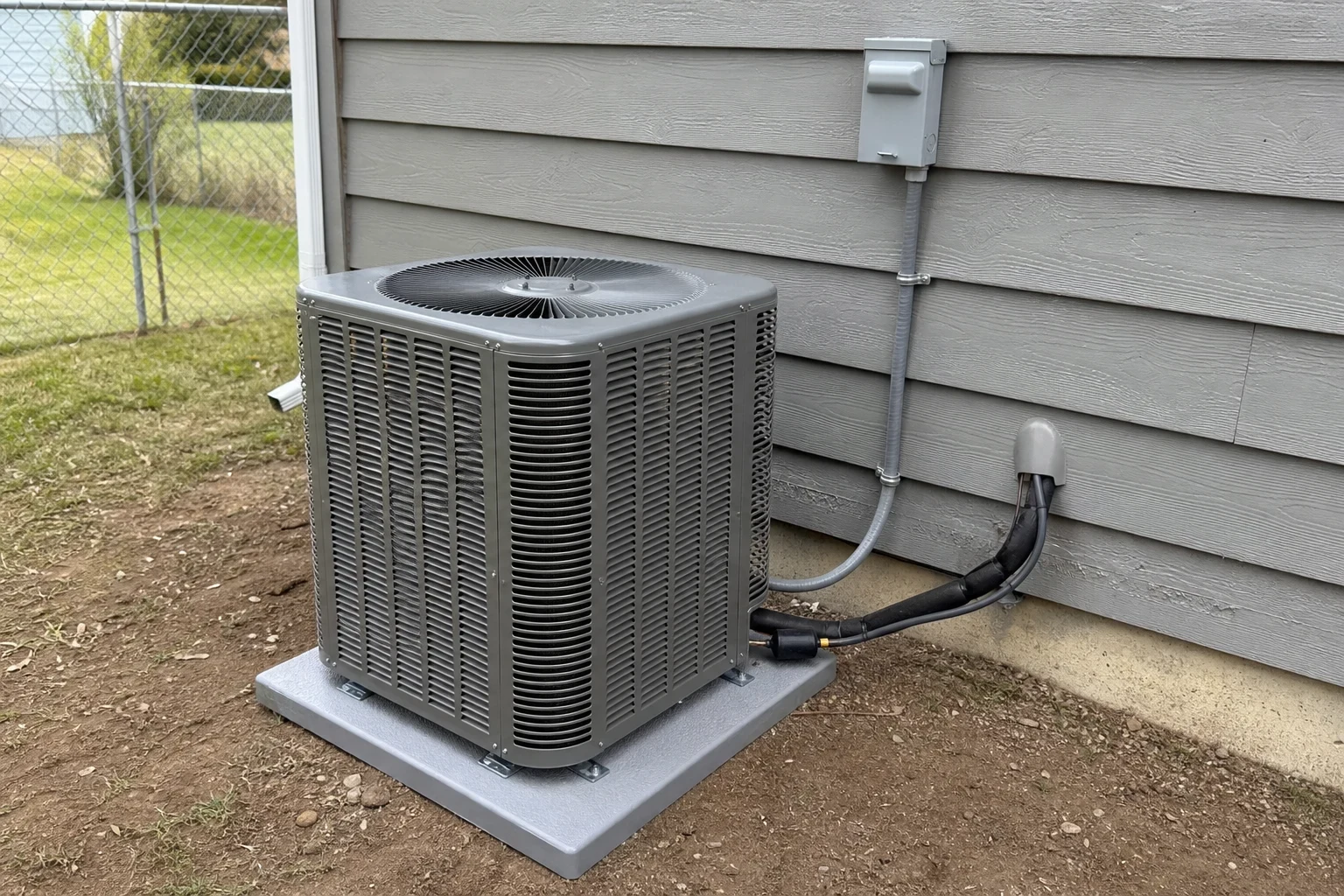
- We look over the condenser or heat pump for bent fins, a cracked fan blade, crushed refrigerant lines and a pad that has moved. Everything we find is photographed so you have a record for an insurance claim.
- A written price before repairs
- You get the quote on paper before we start any repair. Approve it and the diagnostic fee is credited toward the work.
- Stopgaps while a part is on order
- When a part must be ordered, we try to get some heat going safely, for example by running a heat pump on its backup heat strips, and we tell you how long that arrangement will last.
Signs you need emergency HVAC repair
Gas smell or a CO alarm
Leave the house first, then call the gas utility. Once they've cleared it, call us to find the leak or the combustion problem before the furnace runs again.
No heat in freezing weather
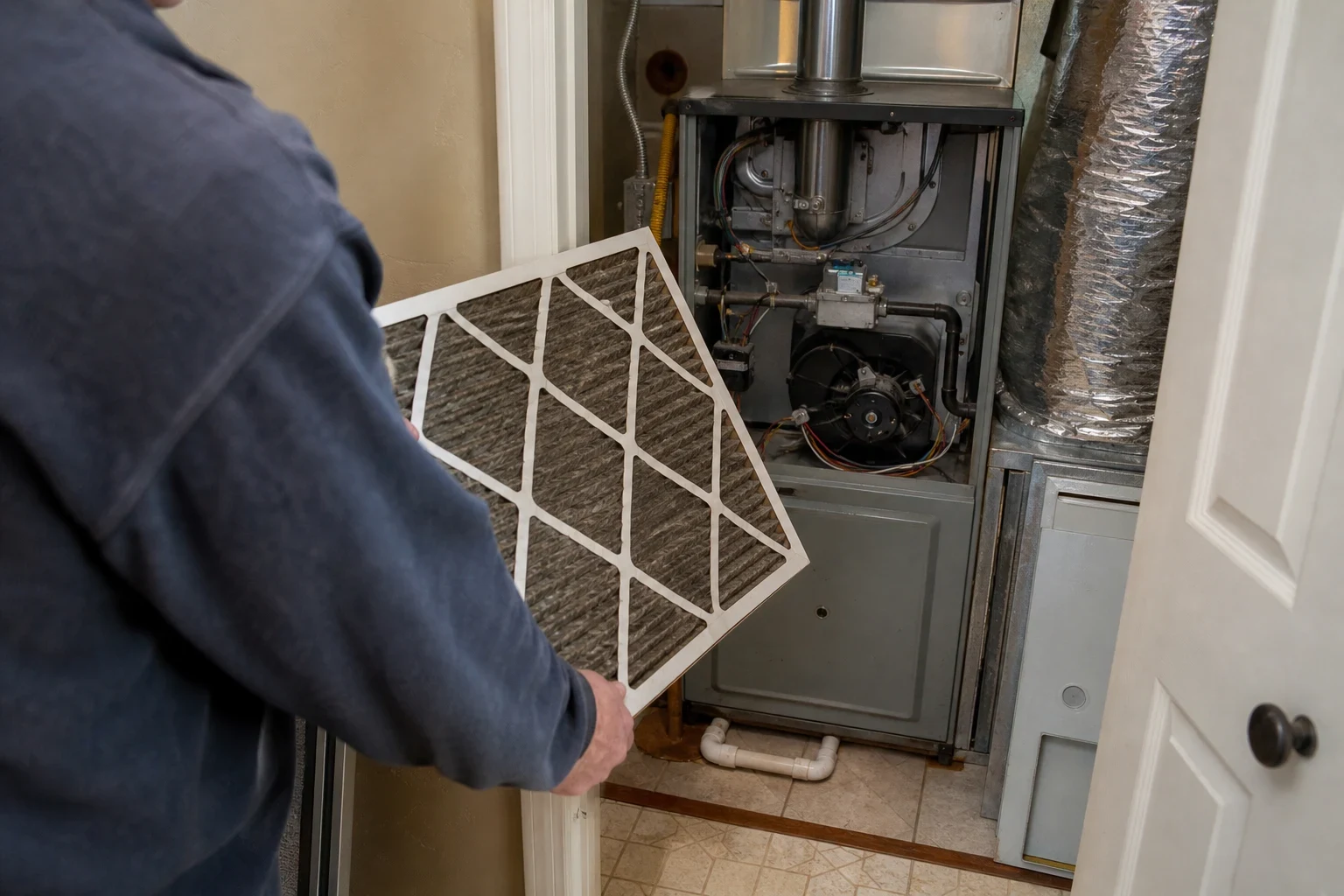
If the furnace clicks but never lights, or the blower pushes cold air, the igniter, flame sensor or pressure switch is a likely cause. Each needs testing, not a reset loop.
System dead after an outage or lightning
A unit that won't respond once power returns often has a blown low-voltage fuse or a scorched board. Flipping the breaker over and over can make it worse.
Burning smell or smoke
A seized blower motor or a shorted wire can overheat. Turn the system off at the thermostat and at the service switch.
Outdoor unit struck or iced over
Fallen limbs, hail and thick ice can bend the fan or puncture the coil. Running it in that condition can ruin the compressor.
Water flooding near the furnace
A blocked condensate line or a frozen drain on a high-efficiency furnace can trip the safety switch and soak the floor.
How an emergency call runs
- 1
Talk it through on the phone
You tell us what you're seeing, hearing or smelling. We tell you what to switch off and what's safe to leave running while we're on the way.
- 2
Arrive, protect and secure
We lay down floor protection, shut off power or gas if needed, and run the safety checks before anything else.
- 3
Find the real cause
We test components with a meter and gauges and show you the failed part. If wind, hail or ice hit the outdoor unit, we photograph it.
- 4
Quote, repair, test
You approve the written quote, we make the repair, then run the system through a full heating or cooling cycle to confirm temperature rise or split and safe operation.
What sets the price of an emergency repair
Midnight, Sunday or a holiday, the rate matches a weekday afternoon, because we add no emergency or after-hours fees. The price depends on which component gave out and how many hours the fix takes. You'll have the number in writing before any tools come out.
- Which component gave out
- Swapping a run capacitor or cleaning a dirty flame sensor takes little time and an inexpensive part. A control board, inducer motor or compressor costs far more in parts and labor.
- How hard the storm hit
- Combing bent condenser fins back into line is quick work. A punctured coil or crushed line set means replacement parts, pulling a vacuum on the system and a fresh refrigerant charge.
- Refrigerant type and amount
- Systems still running R-22 are costly to recharge because that refrigerant is no longer produced. A large leak on one of those units can tip the decision toward replacement.
- Whether the part is on the truck
- We carry common igniters, capacitors and contactors. Parts for older or uncommon equipment may have to be ordered, which adds a return trip.
Emergency HVAC repair questions
Something not covered here? (509) 512-1867
Is the rate different at night or on a weekend?
No. We don't add emergency or after-hours fees at any hour. You pay a diagnostic fee, which is credited toward the repair, plus the work you approve in writing.
My power came back but the furnace won't start. What should I do?
Check that the furnace switch is on and the breaker hasn't tripped, then reset it once. If it trips again or nothing happens, stop there and call us. A surge may have blown the board fuse or hurt the control board, and repeated resets can make it worse.
Will my insurance cover storm damage to my AC or heat pump?
That depends on your policy and the cause, and only your insurer can decide it. We photograph the damage, note what caused it, and put the repair in a written quote you can send with your claim.
Should I repair a storm-damaged unit or replace it?
If the compressor and coil are intact, repair is usually the sensible choice. If the coil is punctured on an older unit, replacement may cost about the same over a few years. We give you an honest answer, and estimates on installations and replacements are free.
Do you take night calls outside Spangle?
Yes. We answer emergency calls in Spangle and nearby towns including Cheney, Spokane, Spokane Valley, Airway Heights and Medical Lake.
Heat out or the outdoor unit hit? We're up.
Tell us what happened and we'll walk you through what to shut off while we head your way. You'll see a written quote before any repair starts.