ServicesMaintenance Plans
HVAC Maintenance Plans in Spangle
A maintenance plan puts a technician on your equipment twice a year, before the first heat wave and before the first hard freeze. We test the parts that fail most under stress, clean what needs cleaning and tell you plainly what is wearing out.
What a Maintenance Plan Does for Your Home
Most no-heat and no-cooling calls trace back to a small part that was already weak: a run capacitor that has drifted below its rated microfarads, a flame sensor coated in oxide, a condensate line slowly filling with algae. Under normal load these parts limp along. A windstorm that flickers the power, a week of triple-digit afternoons or a night near zero pushes them past the edge.
Under a plan, those parts get put on a meter twice a year instead of being guessed at. Plans start at $14.99 a month, and members receive both seasonal tune-ups, a discount on any repair work and a spot near the front of our schedule. That last benefit counts most in the days after a storm, when many neighbors are calling at once.
A plan pays off best once your equipment has a few seasons of wear on it, when a heat pump carries the load through both summer and winter, or when you would rather learn the condition of your furnace in October than discover it at 2 a.m. in January.
Our Checklist at Each Tune-Up
Electrical parts tested while running
Capacitors are metered against their rating, contactor points are checked for pitting and scorching, and we read the amp draw on the compressor and fan motors. A capacitor that tests 10 percent low now tends to fail on the next hot afternoon or after a surge.
Outdoor and indoor coils
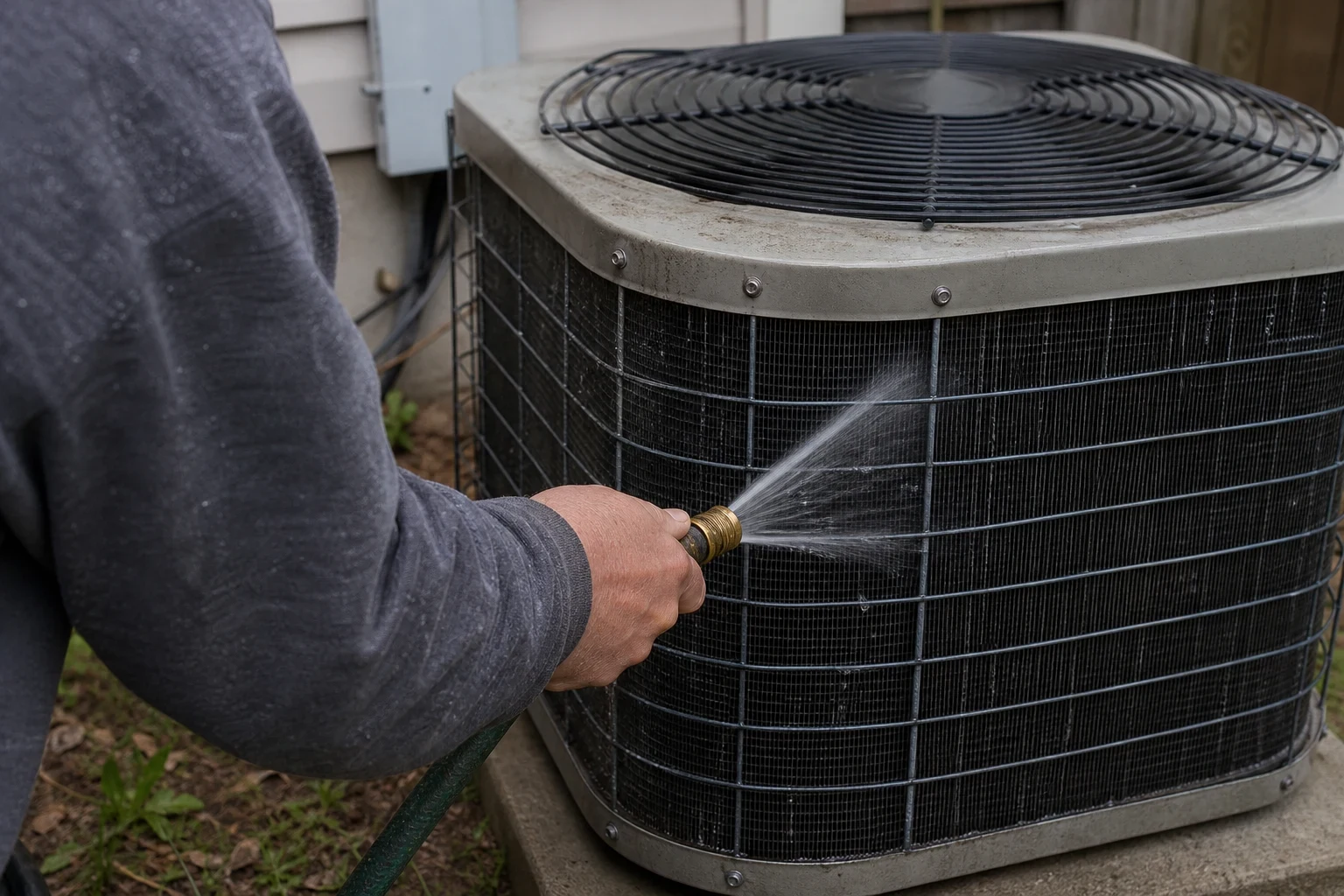
Cottonwood fluff, grass clippings and blowing dust build up on the outdoor coil, pushing head pressure up and making the compressor run hot. We clean the condenser, look over the evaporator coil and comb out bent fins when they need it.
Charge checked by the numbers
We confirm the refrigerant charge against the manufacturer's spec using superheat or subcooling readings, not guesswork. If it reads low, there is a leak, and we tell you so rather than adding refrigerant and leaving.
Gas furnace safety and combustion
In the fall we clean the flame sensor, inspect the hot surface igniter, confirm gas pressure, test the inducer motor and pressure switch and look over the heat exchanger for cracks. A carbon monoxide check at the appliance is part of it.
Drain, filter and blower
The condensate drain gets flushed and the float switch tested, the filter is replaced or we tell you what to use, and we look at the blower wheel. A dirty blower wheel can choke airflow enough to ice a coil in July or trip a high-limit switch in January.
When Your Equipment Is Due for a Checkup
Trouble since the last storm
A slow restart, a tripped breaker or an unfamiliar sound after an outage can mean a capacitor or contactor got hit by the surge. Damaged parts like these often run a little longer before they give out completely.
Starting and stopping too often
When a furnace fires, runs about a minute and quits, the cause is often a coated flame sensor or a high-limit trip from poor airflow. Rapid cycling on an AC can come from a low charge or a control that is going bad.
Puddles by the indoor unit
When the condensate line clogs, water fills the pan and spills onto the floor. A spring drain cleaning keeps that from happening.
Higher bills for the same comfort
Coils caked with dirt and a charge that is slowly dropping force longer run times to hold the same temperature. Your bill usually reveals it before your rooms do.
More than a year since the last visit
Equipment that seems to run fine still gathers dust and wear each season. A heat pump working in both summer and winter wears faster than a furnace used only in the cold months.
What Happens Once You Join
- 1
A quick phone call
Tell us what equipment you have and roughly how old it is, and we quote the plan for free. Your first visit goes on the calendar for the upcoming season.
- 2
Spring visit for cooling
Ahead of the hot months we work through the AC or heat pump in cooling mode, cleaning the coil, testing electrical parts, checking the charge and flushing the drain. Most systems take an hour to an hour and a half.
- 3
Fall visit for heating
Ahead of the first hard freeze we work through the furnace or heat pump in heating mode, with combustion and safety checks on gas units and a defrost test on heat pumps.
- 4
Photos of what we found
Anything worn, pitted or corroded gets photographed, and we explain what it means for your system. A part that needs replacing gets a written quote first, and no work happens without your approval.
What Sets the Monthly Rate
Two things decide what a plan costs: how many pieces of equipment we look after and what type they are. A single gas furnace paired with a split AC is a shorter visit than a dual-fuel system or a house with several ductless heads. Once you tell us what is installed, we give you the number over the phone.
- Number of systems
- Each furnace, air handler, outdoor unit or mini-split head adds testing and cleaning time.
- Equipment type
- Heat pumps get checked in both modes, including the reversing valve and defrost board. Gas furnaces need combustion and carbon monoxide checks that electric equipment does not.
- Condition and access
- A condenser buried in shrubs or an attic air handler with a tight access hatch takes longer. Heavily fouled coils may need more than a standard cleaning on the first visit.
- Parts found during a visit
- Tune-up labor is part of the plan, but replacement parts such as a capacitor or igniter are quoted separately, with your plan discount applied.
Maintenance Plan Questions
Something not covered here? (509) 512-1867
Does the plan cover repairs?
The plan covers the two tune-up visits and gives you discounts on repairs plus priority scheduling. Parts and repair labor are quoted in writing before we start. If we need to run a diagnostic on a separate call, the diagnostic fee is credited toward the repair.
Do I get help faster after a storm?
Yes. Plan members get priority scheduling, so after a windstorm or ice event knocks out systems across the area, your call moves ahead in the queue. Our emergency HVAC repair line is answered day and night, and we never add a surcharge for an emergency, night or weekend visit.
Does the plan work for heat pumps and ductless mini-splits?
It does. Heat pumps get checked in both heating and cooling modes, including defrost operation. For ductless mini-splits we clean the indoor head filters and blower wheel, and check each line set connection for oil spots that signal a leak.
Should I still change my own filters?
Yes. A standard 1-inch filter usually needs changing every one to three months, more often during wildfire smoke or if you have pets. We will show you the right size and how to install it with the airflow arrow pointing toward the blower.
My system is brand new. Is a plan worth it?
New equipment still collects dirt on the coils and in the drain line every season. Keeping a record of yearly maintenance also helps if you ever need to make a manufacturer warranty claim, since many manufacturers ask for proof of regular service.
Be Ready Before the Next Freeze
Let us know what is installed in your home and we will price a plan to match. Already have something broken? Our 24/7 emergency HVAC repair covers that as well.